Picture this: It’s April of your final year. You’re scrolling LinkedIn, coffee going cold, applying to entry-level marketing roles. Then you notice it — every job posting asks for “hands-on experience with Google Analytics 4,” “familiarity with AI content workflows,” and “proven SEO results.” Your degree says Marketing. Your resume says… not much else.
This gap is real, and it’s growing. The good news? You still have time to close it.
Why 2026 Is a Different Game
Two years ago, knowing how to schedule social posts and write a decent caption was enough to land a coordinator role. Not anymore.
The marketing job market has been restructured by three simultaneous shifts: AI automation eliminating repetitive tasks, algorithm changes making organic reach harder, and employers raising the bar for what “entry-level” actually means. LinkedIn’s Emerging Jobs Report identified Artificial Intelligence Specialist as the top emerging job, with 74% annual growth, which explains why AI-related skills are becoming harder to ignore across digital work. The American Marketing Association’s 2025 Marketing Skills Report also highlights AI transformation, shifting consumer expectations, and changing marketing channels as major forces reshaping the skills marketers need now.
And here’s the uncomfortable truth about Google Trends data: searches for “digital marketing skills for students” have nearly doubled since 2022, which means your competition is paying attention too. The students who act on this information now — not after graduation — are the ones who get the offers.
The S.K.I.L.L. Framework — Your Student Roadmap to Marketing Readiness
Before jumping into the list, here’s a way to think about skill-building that doesn’t lead to overwhelm. This is the S.K.I.L.L. Framework, built specifically for students juggling coursework, internships, and the occasional social life.
S — Stack fundamentals first (SEO, analytics, copy — these underpin everything) K — Know one platform deeply (generalists get overlooked; specialists get hired) I — Implement on a real project (a personal blog, a student org, a freelance client) L — Layer in AI tools second (AI amplifies skill; it doesn’t replace it) L — Link everything to results (employers want numbers, not activity reports)
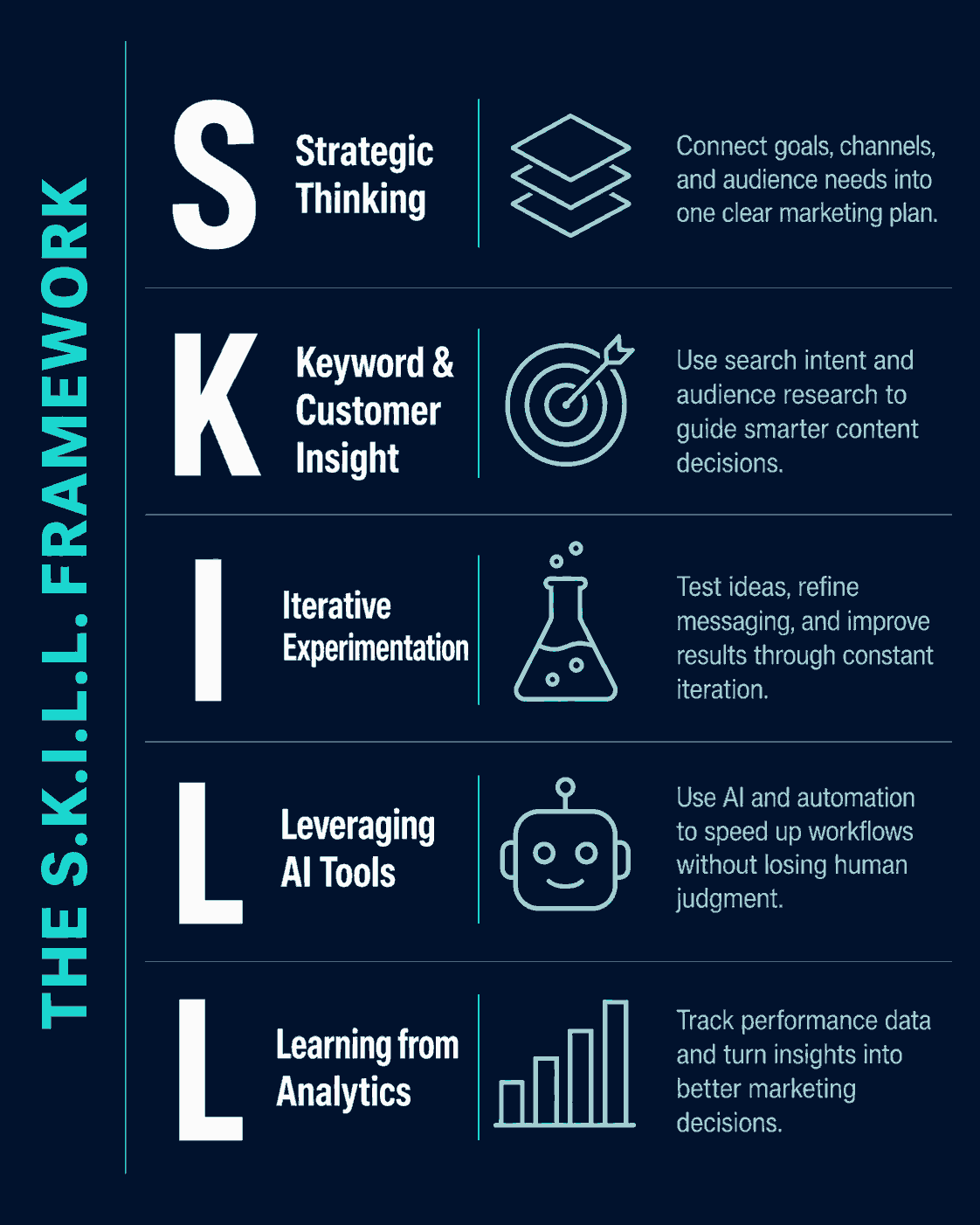
Use this as a filter. Every skill below fits into this structure. Don’t try to learn all twelve simultaneously — pick a layer, go deep, move to the next.
12 Digital Marketing Skills for Students to Learn Before Graduation
1. SEO Fundamentals
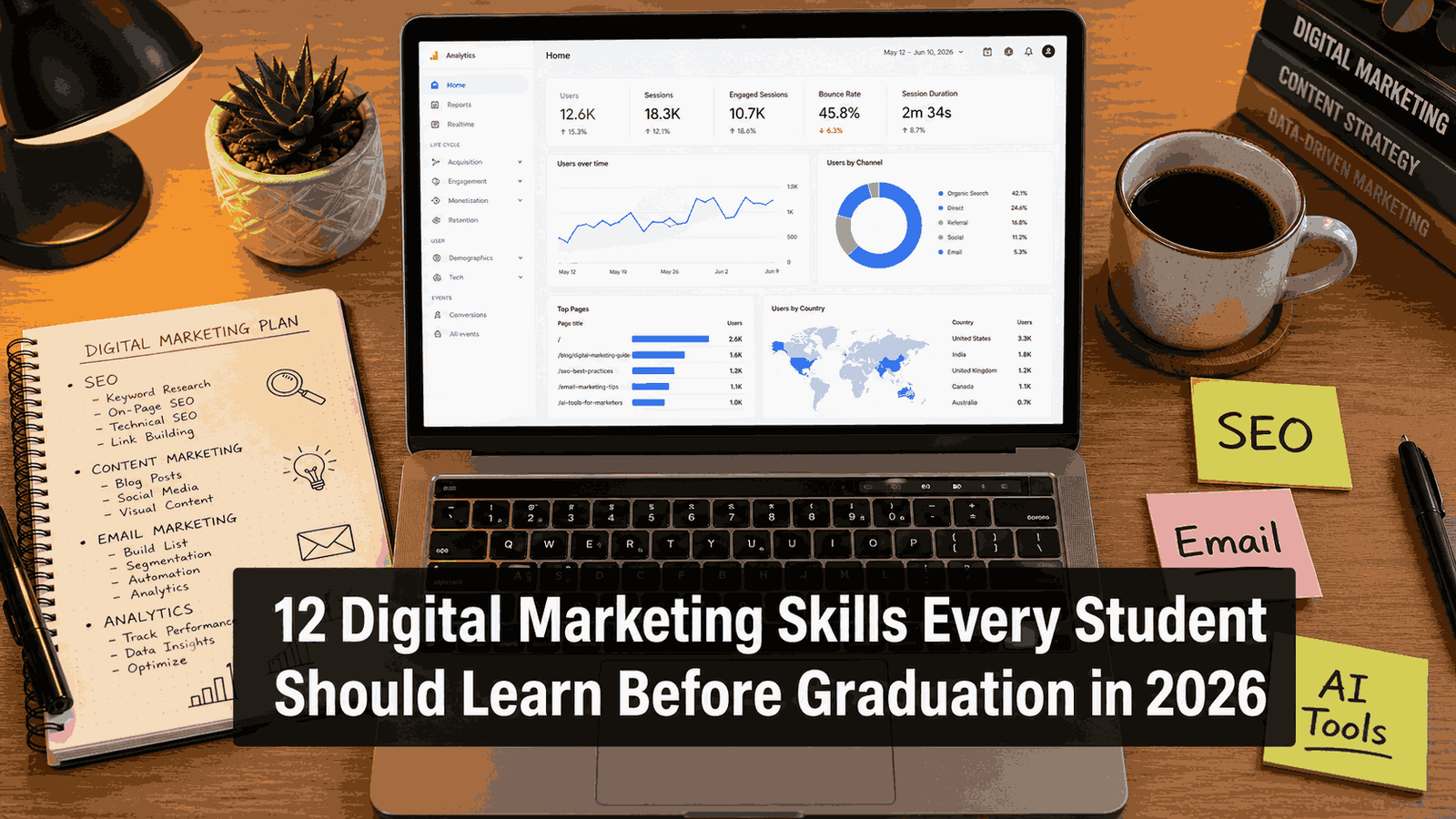
SEO isn’t about tricking Google. It’s about understanding how people search and structuring content to match that intent. Learn keyword research (try Ubersuggest or Google Keyword Planner — both free), on-page optimization, and basic link building. Even running a small personal blog and getting it to rank for one low-competition keyword is a portfolio piece.
What to practice: Optimize a 500-word article around a long-tail keyword. Track its ranking over 4–6 weeks.
2. Content Marketing & Storytelling
Content is still the backbone of most digital strategies. But the skill isn’t “writing content” — it’s mapping content to a buyer journey. Understand the difference between awareness content, consideration content, and conversion content. Learn how to write a headline that earns a click, and a body that earns trust.
What to practice: Write a 3-part content series for a fictional brand. Map each piece to a funnel stage.
3. Social Media Strategy (Not Just Posting)
Knowing how to use Instagram personally and knowing how to grow an account professionally are completely different skills. Study platform algorithms, content calendars, engagement strategy, and how to read native analytics. Choose one platform and actually grow something — a niche page, a student club account, anything.
What to practice: Build a content calendar for one platform for 30 days. Execute it. Screenshot the analytics.
4. Email Marketing
Litmus reports that email marketing averages around $36 in return for every $1 spent., according to industry benchmarks [Source: Litmus Email Marketing ROI Report ]. Learn how to build a list, write a welcome sequence, and A/B test subject lines. Tools like Mailchimp and Brevo have free tiers perfect for student projects.
What to practice: Build a 5-email welcome sequence for a student newsletter or blog.
5. Paid Advertising Basics (Google & Meta Ads)
You don’t need a big budget to learn ads. Google’s Skillshop offers free certifications. Meta Blueprint covers Facebook and Instagram ads. Understanding audience targeting, ad copy structure, and basic bidding strategy makes you immediately useful to any marketing team.
What to practice: Run a $20 campaign on Meta Ads for a personal project. Document everything — cost per click, reach, what you changed.
6. Analytics & Data Interpretation
This is the most underrated skill on this list. Every marketing team needs someone who can look at Google Analytics 4 data and tell a story with it. Learn how to set up goals, track conversions, read acquisition reports, and build a basic dashboard. This skill alone separates candidates at the interview stage.
What to practice: Set up GA4 on a free WordPress or Wix site. Run it for a month. Present a mock “monthly performance report.”
7. AI Prompt Engineering for Marketers
Here’s where 2026 differs from 2024. AI tools are now embedded in marketing workflows at every level — content drafting, ad copy iteration, keyword clustering, email personalization. Knowing how to write effective prompts, edit AI output intelligently, and integrate tools like Claude or ChatGPT into a real workflow is a hard skill now, not a novelty.
What to practice: Use an AI tool to produce a first draft of a blog post, then rewrite it using your own research and voice. Practice the edit, not just the generation.
8. Video Marketing & Short-Form Content
Short-form video is not slowing down. Brands are investing heavily in Reels, Shorts, and TikTok content. But beyond filming, learn the structure: hook in the first 2 seconds, clear value delivery, CTA. Learn basic editing using CapCut or DaVinci Resolve. If you can script, shoot, and edit a 60-second brand video, you’re ahead of most applicants.
What to practice: Script and produce three 60-second educational videos for a topic you know well. Post them. Study retention data.
9. Conversion Rate Optimization (CRO)
CRO is the science of making more people do the thing you want them to do — click, sign up, buy. It involves understanding landing page design, button placement, copywriting psychology, and A/B testing. Most students have never heard of it. That’s exactly why you should learn it.
What to practice: Take any landing page and redesign it with a hypothesis (“If I change the headline to focus on a benefit, click-through will improve”). Write up your reasoning.
10. Personal Branding
Your LinkedIn is your first portfolio. A well-built LinkedIn profile with a clear niche, original posts, and consistent engagement is visible proof of your marketing ability. If you can grow your own following and articulate how you did it, that’s the interview answer that closes offers.
What to practice: Post once a week on LinkedIn for 8 weeks. Track follower growth, impressions, and engagement rate.
11. Marketing Automation
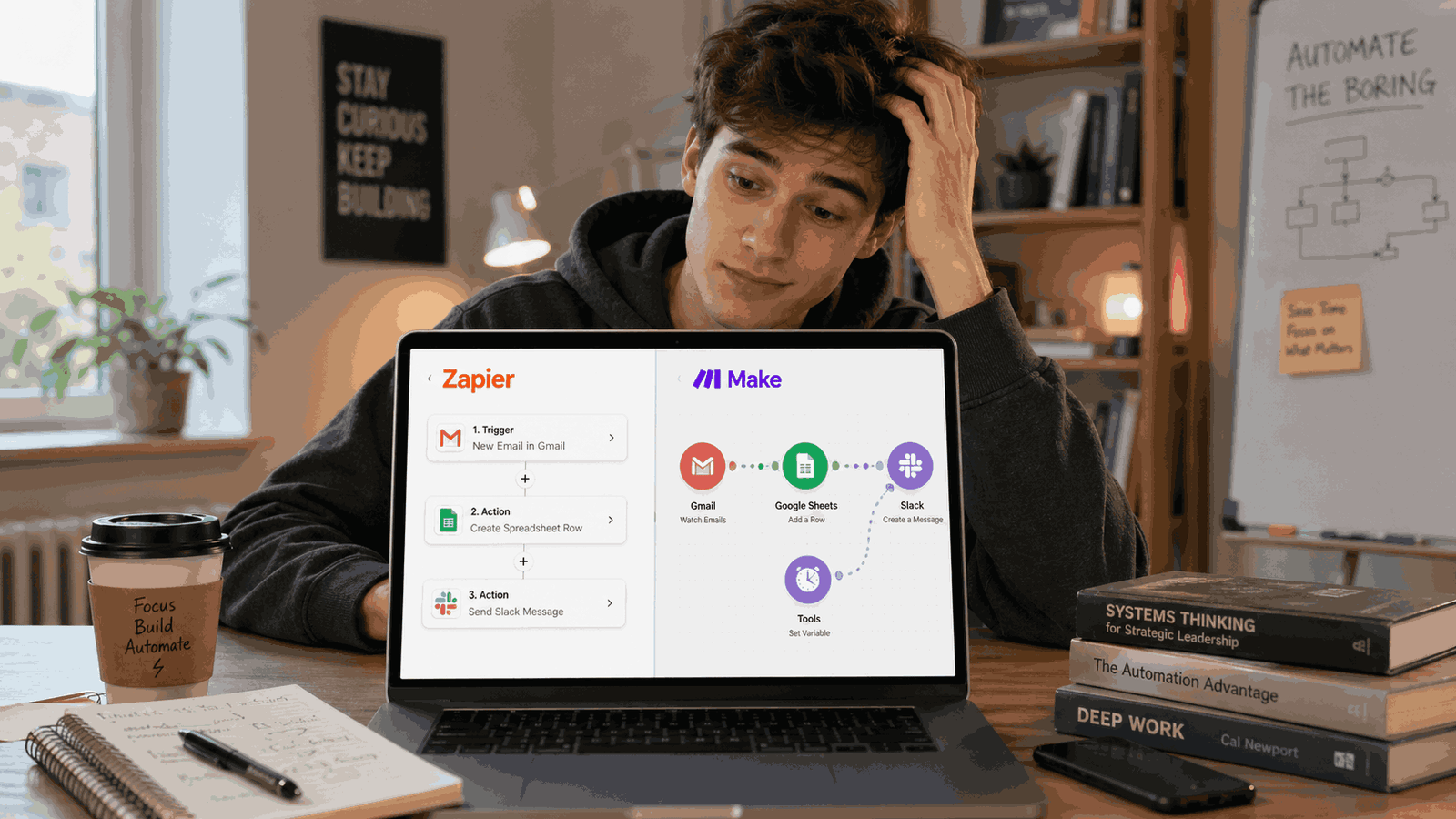
Tools like HubSpot, ActiveCampaign, and Zapier let small teams do the work of large ones. Understanding how to set up basic automation flows — lead capture → email sequence → CRM tagging — makes you immediately valuable at a startup or agency. HubSpot offers a free CRM and a free certification.
What to practice: Build a basic lead capture + 3-email automation in HubSpot’s free tier.
12. Basic Copywriting Principles
Every single marketing channel requires copy. Social posts, ad headlines, email subjects, landing pages, product descriptions — all of it. Learn the AIDA framework (Attention, Interest, Desire, Action), the PAS formula (Problem, Agitate, Solution), and how to write for different audiences. Read David Ogilvy’s Ogilvy on Advertising and then read landing pages. You’ll never see them the same way.
What to practice: Rewrite the homepage copy of any brand you love. Make it tighter, clearer, more compelling.
Example Scenario: How a Student Could Build a Strong Marketing Portfolio
Imagine a third-year communications student named Anna who spends six months applying the S.K.I.L.L. Framework before sending out job applications.
She starts a personal blog targeting low-competition keywords in the personal finance niche. Over time, some posts begin bringing in organic traffic. She tracks impressions, clicks, rankings, and affiliate conversions, then turns the project into a simple portfolio case study. She also runs a small test campaign for a local bakery with a limited budget and documents the campaign goal, targeting, ad copy, results, and lessons learned.
Now, instead of saying “I’m interested in digital marketing,” she can show proof: a blog she built, data she tracked, a campaign she tested, and decisions she made based on results.
The degree helps her get considered. The project helps her prove she can do the work.
The Contrarian Take: Your Marketing Degree Alone Won’t Save You
Here’s something most academic advisors won’t say out loud: a marketing degree without a portfolio is nearly worthless in 2026’s job market.
This isn’t cynicism — it’s market reality. Employers can’t evaluate a transcript. They can evaluate a GA4 report, an email open rate, a campaign you ran and measured. The degree signals that you can finish something. The portfolio signals that you can do something.
The students treating their education as a checkbox are going to spend months in a frustrating job search. The ones treating their student years as a low-stakes lab — where they can run experiments, fail cheaply, and build actual evidence of skill — are already winning before they graduate.
Common Mistakes Students Make When Building Marketing Skills
1. Learning without doing. Completing ten certifications and running zero real campaigns is the most common trap. Certifications show willingness; results show ability.
2. Spreading too thin too fast. Trying to master SEO, paid ads, video, email, and CRO simultaneously produces surface-level knowledge in everything and depth in nothing. Pick two, go deep, then expand.
3. Ignoring analytics entirely. Students who know how to create content but can’t interpret performance data will always be seen as execution-only hires — lower pay, slower advancement.
4. Treating AI as a shortcut instead of a tool. Using AI to write your assignments and calling it “AI marketing experience” won’t hold up in an interview. Knowing how to use AI to improve your output is the real skill.
5. Waiting for the “right time” to start. There are four semesters left in a typical bachelor’s program. The students who start building in Year 2 have a fundamentally different portfolio than those who start in Year 4. Urgency matters.
Quick Comparison: Top Free Platforms to Learn These Skills
| Platform | Best For | Cost | Certification? | Time to Complete |
|---|
| Google Skillshop | Google Ads, GA4, Search Console | Free | Yes | 4–8 hours per course |
|---|
| HubSpot Academy | Inbound marketing, email, CRM, content | Free | Yes | 3–6 hours per course |
|---|
| Meta Blueprint | Facebook & Instagram Ads | Free | Yes (paid exam) | 2–5 hours per course |
|---|
| Coursera / edX | SEO, analytics, strategy (university-level) | Free to audit | Paid cert | 4–10 weeks |
|---|
| CopyHackers / Copyblogger | Copywriting fundamentals | Free resources | No | Self-paced |
|---|
Frequently Asked Questions
Q: Which digital marketing skill is most important to learn first as a student?
Start with SEO and analytics together — they’re the foundation everything else builds on. SEO teaches you how people search and how content ranks. Analytics teaches you how to measure whether what you’re doing is working. Without these two, you’re creating content or running campaigns without being able to evaluate them. Most free learning paths (Google Skillshop, HubSpot Academy) will walk you through both in under 10 hours total.
Q: Can I learn digital marketing without any paid tools or ad spend?
Yes — almost entirely. Google Keyword Planner, Google Analytics 4, Google Search Console, HubSpot CRM, Mailchimp’s free tier, Canva, and CapCut are all free and industry-standard. A $20–$30 experiment budget for paid ads is useful but not required to learn the fundamentals. Most foundational skills can be practiced on a personal blog, a social media account, or a volunteer project for a student organization.
Q: How do I show digital marketing skills if I have no work experience?
Your own projects are your experience. A personal blog with measurable traffic, a social account you grew, a campaign you ran for a club, a mock strategy deck you built for a brand — all of these are legitimate portfolio pieces. Employers in 2026 understand that good candidates have self-initiated projects. Document your results with screenshots and numbers, put them in a simple PDF or Notion page, and link it in your resume.
Q: How long does it take to become job-ready in digital marketing as a student?
Realistically, six to twelve months of consistent practice — roughly one to two focused hours per week beyond your coursework — builds enough depth to be credible in interviews. The key word is “practice,” not just “study.” Completing courses is faster (a few weeks); building proof of results takes longer. Start in Year 2 or 3 if possible.
Q: Is a digital marketing certificate worth it for students?
Free certificates from Google, HubSpot, and Meta are worth getting — they signal baseline literacy and take only a few hours each. Paid bootcamp certificates are harder to justify at full price unless they include hands-on mentorship and portfolio projects. Your portfolio will always outweigh any certificate in a hiring conversation. Get the free ones; be selective about paid programs.
Start Before Graduation — Your Competitive Window Is Closing
The skills in this list are not secret. But most students won’t act on them until it’s too late — until they’re four weeks from graduation wondering why their applications aren’t converting.
You have a genuine advantage right now: time, access to free tools, and the low stakes of student life to experiment without consequence. A failed email campaign in your dorm room costs you nothing. A failed campaign in your first job costs you your reputation.
Pick two skills from this list. Apply the S.K.I.L.L. Framework. Build one real project this semester. Document it. Then repeat.
By the time your classmates start scrambling, you’ll already have the portfolio they wish they’d built.
Want to go deeper? Start with the free HubSpot Academy content marketing certification — it covers strategy, SEO, and email in one structured path and takes about five hours to complete.

Noman Ali is a student and beginner digital skills writer behind NaqVentures. He writes practical guides about AI tools, automation, SEO, blogging, and student productivity based on real learning, testing, and beginner-focused workflows.